
A home energy monitor can help you understand where your electricity is going, even if your home doesn’t have a smart meter. If you’ve ever opened your electricity bill and wondered what used all that power, you’re not alone. The good news is that you can still track your home’s energy use with a few simple tools and practical methods.
The good news is that you don’t necessarily need a smart meter to monitor home energy.
With the right combination of plug-in energy monitors, smart plugs, utility information, and simple tracking, you can get a much clearer picture of how your home uses electricity.
In this guide, we’ll look at practical ways to monitor home energy without a smart meter, including options for renters and homeowners.
What Is a Smart Meter?
Before looking at alternatives, it helps to understand what you’re missing.
A smart meter is an advanced electricity meter that can record energy consumption at regular intervals and communicate usage information to the utility. Depending on the system, customers may be able to see hourly or near-real-time consumption data.
That information can be useful because instead of seeing only a monthly total, you can identify patterns in your electricity consumption.
But here’s the important part:
You can still monitor individual appliances and estimate household energy use without having a smart meter.
That’s where home energy monitoring tools come in.
1. How a Home Energy Monitor Helps You Track Electricity Use
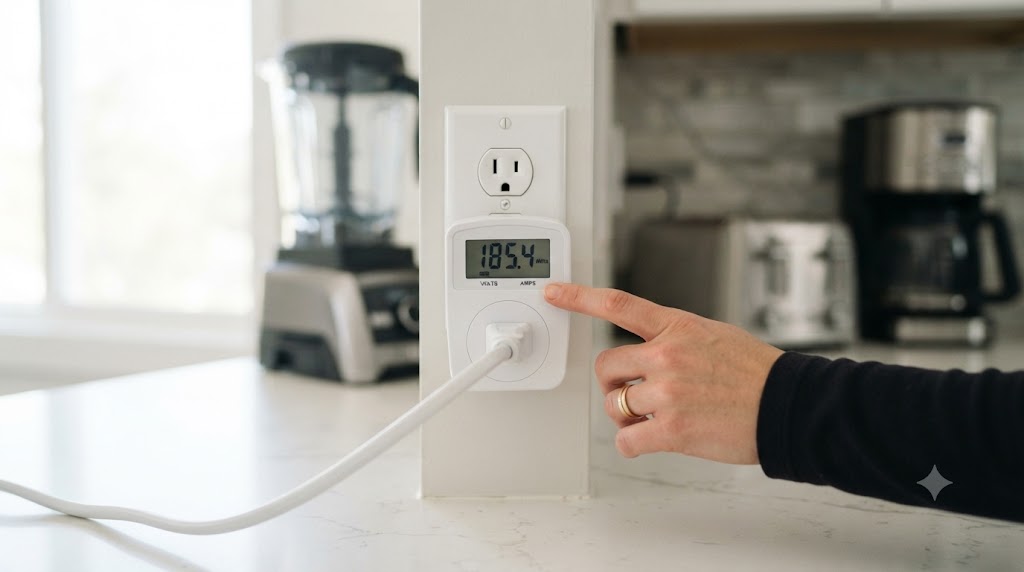
One of the easiest ways to start monitoring electricity use is with a small plug-in energy monitor.
You plug the monitor into an outlet and then connect an appliance to it.
Depending on the device, you may be able to see information such as:
- Current power consumption
- Energy used over time
- Estimated electricity cost
- Voltage
- Wattage
- Usage history
This is particularly useful for appliances that run frequently.
For example, you could monitor:
- Refrigerator
- Freezer
- Gaming PC
- Television
- Dehumidifier
- Portable heater
- Washing machine
- Home office equipment
Instead of guessing which appliance is driving your electricity bill, you can collect actual measurements.
Important: Don’t overload a plug-in monitor or use one with equipment that exceeds its rated capacity.
2. Try Smart Plugs With Energy Monitoring
If you want something more convenient, consider a smart plug that includes energy monitoring.
Not every smart plug measures electricity consumption, so check the specifications before buying.
A model with energy monitoring can potentially show how much electricity the connected device uses through its app.
This can be especially handy for devices that you use every day.
For example, you might connect a smart energy-monitoring plug to your:
TV → computer → coffee maker → desk setup → entertainment system
You can then compare their usage instead of relying on assumptions.
ENERGY STAR’s Smart Home Energy Management System criteria include plug-load monitors and controls capable of reporting power or energy consumption.
For more information about energy-efficient smart-home technology, see the ENERGY STAR Smart Home Energy Management Systems guide.
3. Check Your Utility’s Online Energy Tools
Here’s a method that many homeowners overlook.
Even if you don’t personally have a smart meter, your electricity provider may offer online tools, historical usage charts, bill comparisons, or other energy information.
Log in to your utility account and look for sections such as:
- Energy usage
- Usage history
- Electricity consumption
- Bill comparison
- Energy dashboard
- Home energy report
What you’ll see depends on your utility and the type of meter installed at your home.
If detailed interval data isn’t available, don’t worry. Even monthly or billing-cycle data can help you identify major changes.
For example:
January: 850 kWh
February: 790 kWh
March: 620 kWh
April: 680 kWh
That gives you a useful starting point for figuring out why consumption changed.
4. Use Your Electricity Bill as a Baseline
Your electricity bill is more useful than it looks.
Find your previous 6–12 months of bills and create a simple spreadsheet.
Record:
| Month | Electricity Used | Estimated Cost |
|---|---|---|
| January | 850 kWh | $___ |
| February | 790 kWh | $___ |
| March | 620 kWh | $___ |
| April | 680 kWh | $___ |
Now you can look for patterns.
If electricity usage suddenly increases during summer, your air conditioner may be a major factor.
If winter consumption jumps, electric heating could be responsible.
The goal isn’t to guess perfectly.
The goal is to spot patterns that deserve further investigation.
5. Measure the Appliances That Run the Most
You don’t need to monitor every device in your home.
Start with the appliances that are either:
- Used for many hours, or
- Known to consume significant power.
For many households, good candidates include:
Air Conditioning
Cooling can have a noticeable impact on electricity use, especially during hot weather.
Electric Water Heater
Water heating can consume electricity regularly throughout the day.
Refrigerator
A refrigerator cycles on and off continuously, so measuring it over a longer period is more useful than checking its power draw for only a few minutes.
Space Heater
Electric space heaters can draw substantial power while operating.
Gaming PC
A powerful computer, monitor, and gaming accessories can add up if they’re used for several hours every day.
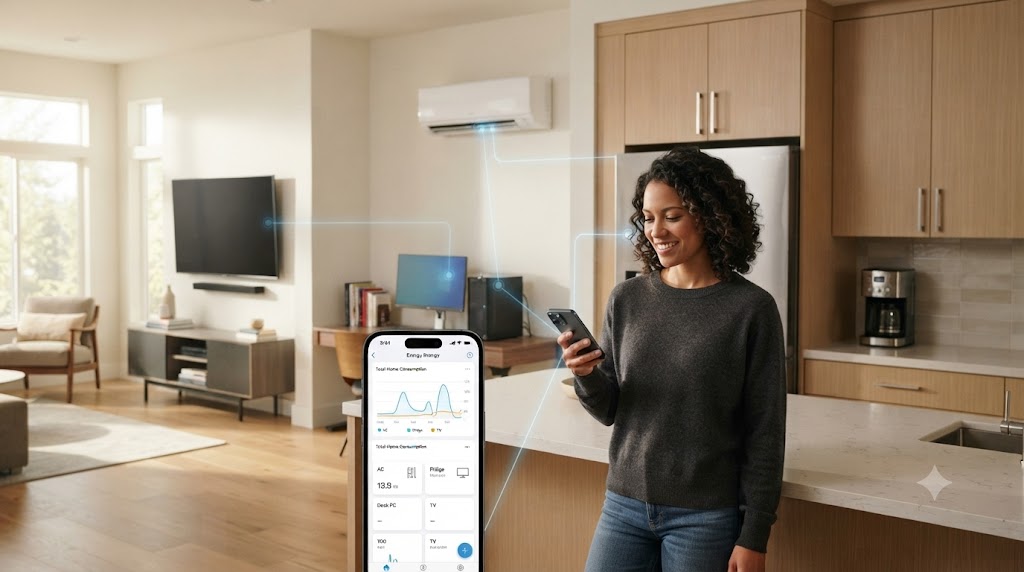
6. Monitor Your Home Energy Usage Over Several Days
Don’t make decisions based on a single reading.
Energy consumption changes constantly.
Your refrigerator might be running when you check it. Your air conditioner may be off. Your computer may be sleeping.
Instead, measure important appliances over a longer period.
A simple approach is:
Day 1: Measure the refrigerator
Day 2: Measure the entertainment system
Day 3: Measure the home office
Day 4: Measure another high-use appliance
For appliances that operate continuously or cycle frequently, several days of measurements can provide a more useful picture.
The longer you observe normal usage, the easier it becomes to recognize unusual patterns.
7. Estimate Which Appliances Cost the Most
Once you know an appliance’s energy consumption, you can estimate its electricity cost.
A simple calculation is:
Energy used (kWh) × electricity price ($/kWh) = estimated electricity cost
For example, if an appliance uses 10 kWh and your electricity rate is $0.15 per kWh:
10 × $0.15 = $1.50
Remember that your actual bill can include other charges, fees, taxes, or different pricing structures.
So treat appliance-level calculations as estimates, not exact predictions of your final bill.
8. Use a Whole-Home Energy Monitor for More Detail
If you want to go beyond individual appliances, a whole-home energy monitor may be worth considering.
These systems can provide a broader view of electricity consumption and may use sensors installed around the home’s electrical system.
Some advanced systems can monitor electricity at the circuit level.
That can help answer questions such as:
“Is my HVAC system really responsible for most of my electricity use?”
or
“How much power is my home office using?”
ENERGY STAR notes that smart-home energy management systems can combine connected devices with energy monitoring and controls to help users understand and manage consumption.
⚠️ Safety Note
Some whole-home monitoring systems require access to your electrical panel.
Do not open or work inside an electrical panel unless you’re qualified to do so.
If professional installation is required, hire a licensed electrician.
How to Use a Home Energy Monitor Without a Smart Meter
Yes.
You can use several different methods depending on how much information you need.
Home Energy Monitor Setup for a Simple Home:
Use:
Plug-in energy monitor + electricity bill
Home Energy Monitor for a Smart-Home Setup:
Use:
Energy-monitoring smart plugs + mobile app
For whole-home monitoring:
Use:
Whole-home energy monitor + professional installation when required
The best choice depends on your home, budget, technical comfort level, and the type of information you want.
What Is the Best Option for Renters?
If you’re renting an apartment or house, you probably don’t want to modify the electrical panel.
In that case, start with plug-in energy monitors or energy-monitoring smart plugs.
They’re easier to use and can help you understand individual appliance consumption without making permanent changes to the property.
Start small.
Monitor one or two appliances that you suspect are using a lot of electricity, then expand if necessary.
What Is the Best Option for Homeowners?
Homeowners have more choices.
You can start with plug-in monitors and eventually move toward a whole-home monitoring system if you need more detailed information.
If you’re also interested in smart-home automation, energy monitoring can become part of a broader home energy management setup.
For example, ENERGY STAR describes systems that can use occupancy information, schedules, connected lighting, thermostats, and monitored plug loads to help manage energy use.
5 Simple Ways to Reduce Energy Waste After Monitoring
Once you’ve identified where your electricity is going, the next step is to make practical changes.
1. Turn Off Devices You Don’t Need
Don’t leave unnecessary electronics running all day.
2. Review Your Biggest Energy Users
Focus your attention on appliances that consistently show high consumption.
3. Check Your HVAC Habits
Heating and cooling can have a major effect on household electricity consumption.
4. Look for Unusual Usage
If something suddenly starts using much more energy than normal, investigate it.
5. Track Your Results
Continue recording your monthly electricity use so you can see whether your changes are actually making a difference.
The US Department of Energy notes that real-time or detailed energy-use information can help users understand consumption patterns and make better decisions about energy use.
Final Thoughts
You don’t need to have the latest smart meter to understand what’s happening with your home’s electricity.
A simple energy monitoring tools, a few energy-monitoring smart plugs, your utility account, and your old electricity bills can give you a surprisingly useful picture of your energy habits.
Start with the appliances you use most.
Measure them over several days.
Look for patterns.
Then make one change at a time.
You may be surprised by which devices are actually responsible for the biggest portion of your home’s electricity use.
And once you know where the energy is going, it’s much easier to decide where your money-saving efforts should go next.