Smart home technology has come a long way. AI home security is no longer limited to simple motion alerts, while smart thermostats and connected devices are helping homeowners manage their homes more efficiently.
Not long ago, having a smart home mainly meant controlling the lights with your voice or asking a smart speaker about the weather. Today, homeowners expect more from connected technology. They want devices that can help protect their property, reduce unnecessary energy use, and make everyday routines easier.
That shift makes sense. With energy costs, home security, and convenience all becoming bigger priorities, the most useful smart home upgrades are the ones that solve real problems.
The good news is that you don’t need to replace everything in your house at once. A few carefully chosen upgrades can make a noticeable difference.
Here are three smart home technologies worth considering for your next upgrade.
1. AI Home Security Is Getting Smarter
Traditional security cameras were fairly simple.
Something moved in front of the camera, and you received a notification.
The problem was that not every movement was a security threat. A passing car, delivery driver, neighbor, or even a family pet could trigger an alert. When your phone constantly fills up with notifications, it becomes easier to overlook the one that actually matters.
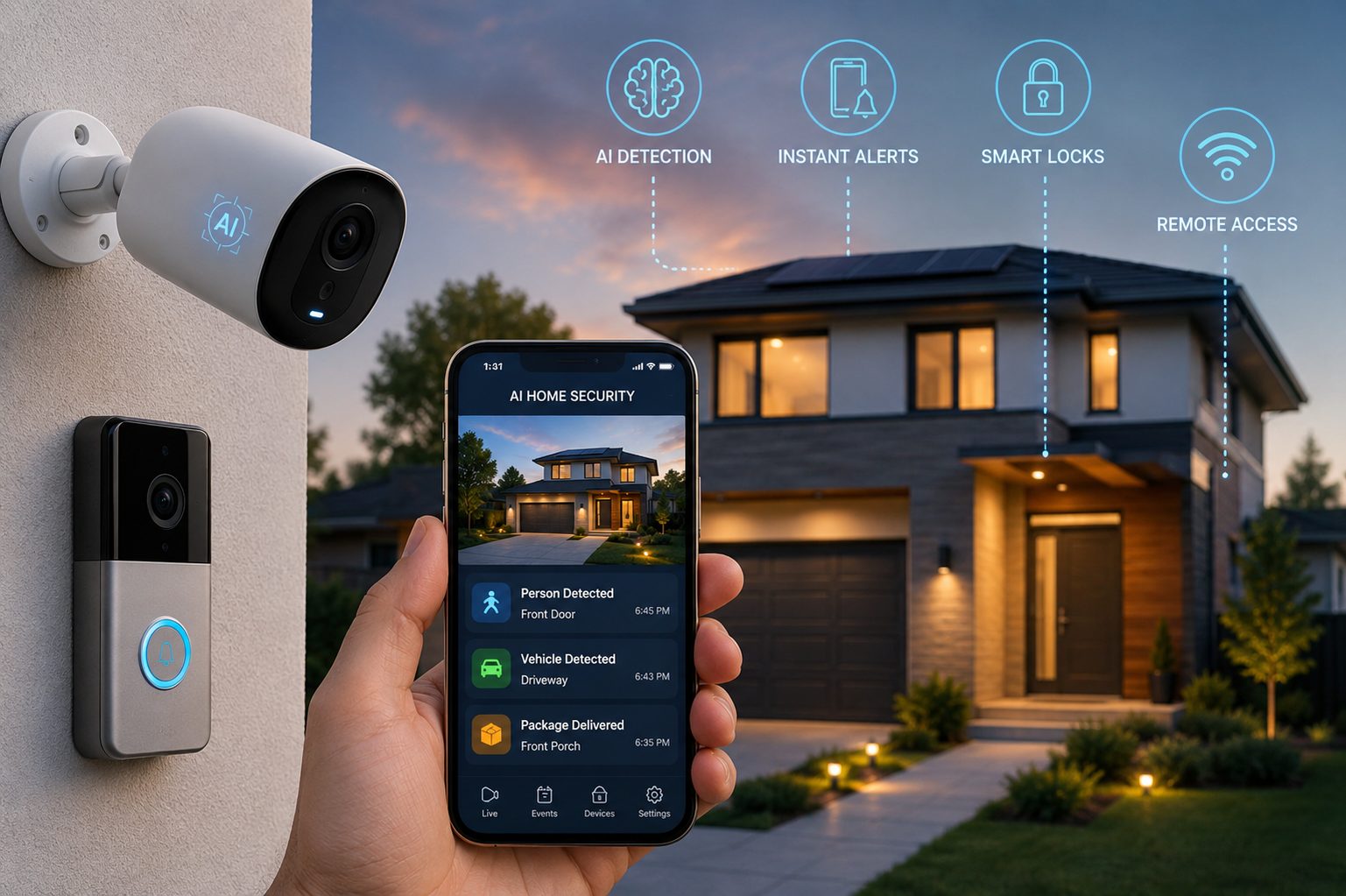
Modern security cameras and video doorbells are becoming more intelligent. Depending on the device, AI-based detection can help distinguish between people, vehicles, animals, and other types of activity.
That doesn’t mean AI security cameras are perfect. False alerts can still happen, and homeowners should consider privacy, data storage, account security, and subscription requirements before choosing a system.
Why AI Security Is More Useful
The biggest improvement isn’t simply having more cameras around your property. It’s getting more useful information from them.
Instead of receiving a basic “Motion detected” notification, a compatible camera may provide additional context about what caused the alert.
That extra information can make it easier to decide whether something needs your immediate attention.
For homeowners exploring different security options, smart home security cameras and related devices can be a good starting point when planning a broader home automation setup.
Combine Security Cameras With Smart Locks
Smart home devices become even more useful when they can work together.
For example, a compatible video doorbell and smart lock can be part of an automated routine that locks the doors when everyone leaves home. Some systems can also connect security cameras, lights, and other devices to create a more coordinated home security setup.
The important thing is to choose compatible products and understand exactly what each device can and cannot automate.
If smart locks are part of your upgrade plan, check the Smart Home section on NextiLife for related guides and practical ideas.
The goal isn’t to automate every part of your home. It’s to automate repetitive tasks that make everyday life easier.
2. Smart Thermostats Can Help Reduce Wasted Energy
Security isn’t the only area where smart technology can make a difference.
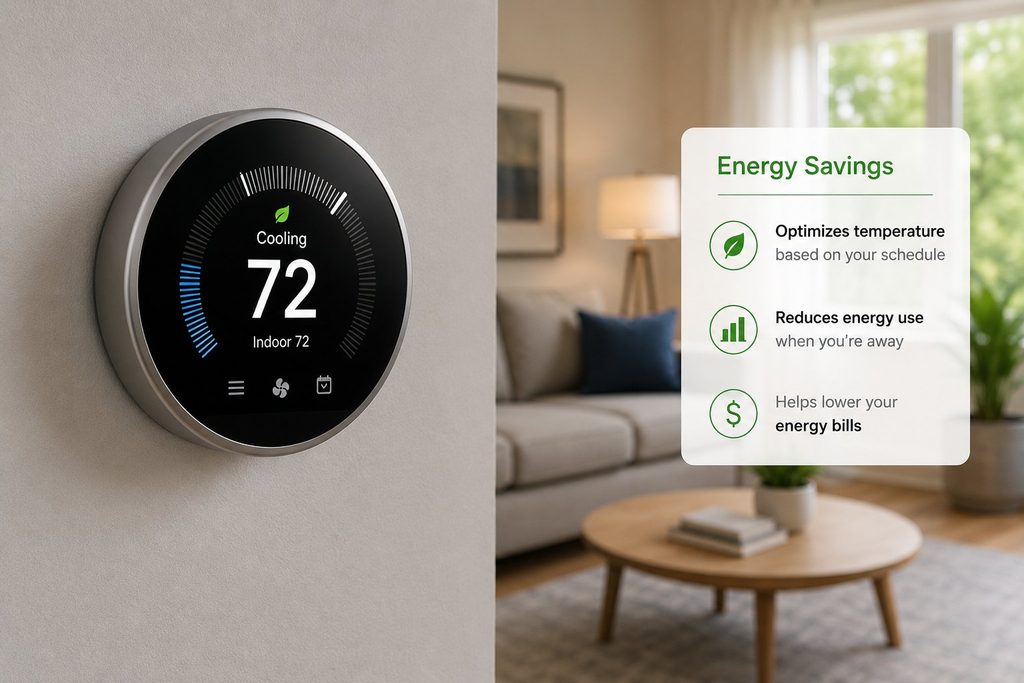
Heating and cooling are major energy users in many American homes. A traditional thermostat generally follows the schedule you program, while a smart thermostat can offer more flexible control.
Depending on the model, a smart thermostat may learn temperature preferences, use occupancy information, allow remote control, and automatically adjust settings when you’re asleep or away.
The U.S. Department of Energy explains that programmable thermostats can help reduce heating and cooling energy use when temperature settings are adjusted during periods when people are asleep or away.
For homeowners who want to understand the basics of home energy use without installing a traditional smart meter, NextiLife also covers practical energy-monitoring methods in How to Monitor Home Energy Without a Smart Meter.
Smart Thermostats and Solar Energy
Smart thermostats can become even more interesting when they’re part of a larger home energy system.
For homeowners with solar panels, managing when electricity is used can be an important part of getting more value from the system. Depending on the equipment, utility plan, and household routine, some energy-intensive activities may be scheduled around periods when solar production is available.
If you’re also considering battery storage for a solar-powered home, see NextiLife’s Best Solar Battery Storage Options for Home.
However, homeowners should be careful with specific savings promises. There isn’t one percentage that applies to every house. Results depend on the home’s insulation, HVAC equipment, climate, occupancy, thermostat settings, and local electricity rates.
For reliable information about residential energy efficiency, the U.S. Department of Energy’s Energy Saver is a useful reference. The department notes that properly using programmable thermostats can help reduce heating and cooling costs.
A Simple Upgrade With Practical Benefits
If your goal is to make your home smarter without taking on a major renovation, a smart thermostat can be a practical place to start.
It solves a simple problem: managing your home’s temperature without constantly remembering to change the settings yourself.
3. Matter Is Making Smart Home Compatibility Easier

One of the biggest frustrations with smart home technology has always been compatibility.
You might find a smart plug you like, a security camera from another manufacturer, and smart lights from a third company. Then you discover that they don’t all work together the way you expected.
That’s where Matter comes in.
Matter is an industry-backed smart home standard designed to improve interoperability between compatible devices and smart home platforms.
The Connectivity Standards Alliance, which develops and maintains the Matter standard, describes Matter as a foundation for secure and reliable smart home connectivity.
You can learn more from the official Matter information from the Connectivity Standards Alliance.
Why Matter Matters for Homeowners
The biggest advantage is choice.
Instead of building your entire smart home around one manufacturer’s ecosystem, Matter-compatible products can give you more flexibility when choosing devices from different brands.
Matter has also continued to evolve. In June 2026, the Connectivity Standards Alliance announced Matter 1.6, adding improvements focused on setup, multi-ecosystem experiences, device management, and more context-aware control.
For homeowners building a smart home gradually, that flexibility can be valuable.
You can start with one or two useful devices today and expand the system later without necessarily replacing everything you’ve already purchased.
What to Check Before Buying a Matter Device
Don’t assume that every Matter device will offer exactly the same features on every platform.
Before purchasing a product, check:
- Whether it supports your preferred smart home platform
- Which Matter features the device supports
- Whether a compatible hub or controller is required
- Whether certain features require the manufacturer’s own app
- Whether the device uses Wi-Fi, Thread, or another connection method
- Whether important features require a cloud subscription
- How the manufacturer handles software and security updates
A few minutes of research before buying can save you from compatibility problems later.
Where Should You Start With AI Home Security Technology?
You don’t need to replace every smart device in your home.
Start with the problem you actually want to solve.
If home security is your biggest concern, a good video doorbell or AI-enabled security camera may be the best first upgrade.
If your electricity bill is the bigger concern, a smart thermostat or home energy monitoring solution could make more sense.
If you’re planning a larger connected-home setup, Matter-compatible products can give you more flexibility as your system grows.
You can also explore NextiLife’s Smart Home guides for more practical ideas covering home automation, security cameras, smart locks, lighting, appliances, and connected devices.
A gradual approach is usually better than buying a collection of gadgets that don’t work well together.
Final Thoughts on AI Home Security Technology
The smartest home isn’t necessarily the one with the most devices.
It’s the one where technology solves real problems.
AI home security can help homeowners get more useful information from security cameras and doorbells. Smart thermostats can make heating and cooling easier to manage. And Matter is helping make connected devices more flexible across compatible ecosystems.
The best upgrade isn’t necessarily the newest gadget on the market.
It’s the device that saves you time, improves security, reduces unnecessary energy use, or makes your daily routine easier.
If you’re upgrading your smart home in 2026, start small, choose products carefully, and build your system around the problems you actually want technology to solve.
What smart home device are you planning to add next? Let us know in the comments.